

An innovative solutions provider leverages cutting-edge technologies and creative strategies to solve complex problems across industries, collaborating with clients for tailored, impactful solutions. Forward-thinking providers anticipate trends, embrace sustainability, and use technology for efficient operations and enhanced customer experiences. Cross-industry collaboration is key for strategic advantages, with platforms facilitating partnerships. Measuring success involves holistics approaches, including security and reliability as critical domains. Future trends include AI integration and IoT, promising efficiency gains and data-driven insights. A strong reputation through consistent high-quality service solidifies leadership in a competitive market.
In today’s rapidly evolving business landscape, innovative solutions providers play a pivotal role in driving growth and staying ahead of the competition. As organizations face complex challenges, from digital transformation to resource optimization, there’s an increasing demand for creative thinking and disruptive technologies. This article delves into the strategies and methodologies employed by these solution providers, offering valuable insights into how they navigate referring domains to create cutting-edge innovations that reshape industries. By exploring real-world examples and expert perspectives, we aim to illuminate the path towards a future where innovation is the cornerstone of success.
- Defining an Innovative Solutions Provider
- Identifying Key Components for Success
- Leveraging Technology: Tools & Strategies
- Fostering Collaboration Across Industries
- Measuring Impact and ROI (Return on Innovation)
- Future Trends Shaping the Industry
Defining an Innovative Solutions Provider

An innovative solutions provider is a forward-thinking organization or individual that excels at identifying complex problems and developing creative, out-of-the-box strategies to address them. These providers are recognized for their ability to think beyond conventional boundaries, leveraging cutting-edge technologies and novel approaches to drive success across various industries. Their work often involves collaborating with clients to understand unique challenges, then designing and implementing tailored solutions that not only meet but exceed expectations.
Success in this domain is measured by the impact of these innovative strategies on business operations, market position, and overall growth. Forward-thinking providers stay ahead of trends, anticipating shifts in consumer behavior, regulatory landscapes, and technological advancements. This proactive mindset allows them to offer solutions that are not only relevant but also vastly superior to existing alternatives. Recognition for such providers often comes in the form of industry accolades, client testimonials, and market leadership awards, underscoring their significant contributions to their respective fields.
For instance, consider a company like ranknrise.us.com, which has carved out a niche as an innovative solutions provider, particularly in digital marketing. By leveraging machine learning algorithms and data analytics, they’ve developed proprietary tools that enable businesses to target audiences with unprecedented precision. This level of personalization and efficiency has led to substantial success stories for their clients, solidifying their reputation as leaders in the industry. Their approach exemplifies how forward-thinking strategies, combined with a deep understanding of referring domains, can yield transformative results.
To become or partner with an innovative solutions provider, organizations should prioritize cultivating a culture of continuous learning and experimentation. Investing in research and development, fostering collaboration across departments, and embracing failure as a stepping stone to success are all crucial elements. By staying at the forefront of their respective fields, these providers not only ensure ongoing recognition but also contribute significantly to shaping industries for the better.
Identifying Key Components for Success

In today’s dynamic business landscape, innovative solutions providers play a pivotal role in driving growth and staying ahead of the curve. Identifying key components for success within this domain requires a strategic and forward-thinking approach. Among the critical factors, sustainability emerges as a guiding principle, not merely an additive but an integral part of the innovation process. Companies that prioritize environmental stewardship often gain a competitive edge, as consumers increasingly demand eco-conscious practices. For instance, a study by McKinsey (2021) reveals that sustainable business models can unlock significant financial benefits, with leading companies achieving a 60% higher return on investment in renewable energy initiatives.
Testimonials from industry leaders further reinforce the importance of this paradigm shift. Forward-thinking organizations are leveraging technology and data analytics to create innovative products and services while minimizing environmental impact. Rank n Rise, for example, has successfully guided numerous clients toward sustainable practices, resulting in not only reduced carbon footprints but also enhanced brand reputation and customer loyalty. Integrating sustainability into business strategies involves a holistic view, encompassing product design, supply chain optimization, and circular economy models. This comprehensive approach ensures that innovation remains both impactful and responsible.
Practical insights suggest that fostering a culture of continuous improvement and collaboration is essential. Companies that encourage open dialogue between departments, embrace diverse perspectives, and invest in employee development tend to generate more disruptive ideas. Additionally, staying abreast of industry trends and collaborating with academic institutions or research partners can expedite the ideation process. By combining expertise from various fields, organizations can create solutions that are not only innovative but also adaptable to a rapidly changing global landscape.
Leveraging Technology: Tools & Strategies

In today’s digital landscape, innovative solutions providers are leveraging technology to stay ahead of the curve and meet evolving customer needs. Technology serves as a catalyst for transformation, enabling businesses to streamline operations, enhance efficiency, and deliver exceptional experiences that drive satisfaction and build reputation. For instance, automation tools can handle repetitive tasks, freeing up resources for strategic initiatives while artificial intelligence (AI) and machine learning (ML) algorithms analyze vast datasets to uncover insights that inform decision-making.
One of the key strategies in leveraging technology is focusing on data-driven approaches. By integrating advanced analytics and tracking customer behavior through various touchpoints, businesses gain valuable insights into consumer preferences and market trends. This focused approach allows for personalized experiences tailored to individual needs, thereby increasing engagement and loyalty. For example, SEO growth labs (seogrowthlab.us.com) employ sophisticated data analytics to optimize website performance, improving user experience and search engine rankings—a holistic strategy that drives organic traffic and boosts online reputation. Additionally, leveraging customer relationship management (CRM) systems enables efficient communication, improves response times, and fosters stronger connections with clients.
Furthermore, cloud computing offers scalable and flexible infrastructure, enabling businesses to adapt quickly to changing market demands without significant investment in hardware. This agility ensures resources are allocated efficiently, supporting innovation and growth. Virtualization technologies also play a pivotal role by allowing multiple applications and services to run on a single physical server, enhancing resource utilization and reducing operational costs. These technological advancements collectively contribute to creating robust and adaptable business models that prioritize satisfaction and maintain a positive reputation in an ever-changing digital realm.
Fostering Collaboration Across Industries

In today’s interconnected world, fostering collaboration across industries is no longer an option but a necessity for businesses aiming to stay ahead of the curve. Forward-thinking organizations understand that breaking down siloes and leveraging diverse expertise can lead to innovative solutions and market advantages. This collaborative approach transcends industry boundaries, allowing companies to navigate complex challenges and capitalize on emerging opportunities. By fostering partnerships with peers in non-competing sectors, businesses can tap into new knowledge pools, share resources effectively, and create synergies that propel growth and enhance their reputational standing.
Take, for instance, the thriving collaboration between tech giants and traditional industries like healthcare. Reputable technology companies have relied upon their expertise in data analytics and artificial intelligence to revolutionize patient care, streamline administrative processes, and improve clinical outcomes. This cross-industry partnership has resulted in groundbreaking applications, such as AI-driven diagnostic tools that enhance accuracy and speed. Similarly, the integration of IoT devices into smart cities has led to more efficient urban management, improved public safety, and enhanced quality of life for citizens—a testament to what can be achieved when forward-thinking organizations join forces.
Building successful collaborations requires a strategic approach. First, identify potential partners with complementary strengths and shared goals. Then, establish clear communication channels and define mutually beneficial objectives. Regular knowledge-sharing sessions, joint research initiatives, and pilot projects are effective ways to cultivate these partnerships. For instance, https://seogrowthlab.us.com has successfully facilitated cross-industry collaborations through tailored strategies that leverage referring domains and other SEO best practices. By fostering a culture of openness and collaboration, companies can unlock the full potential of their networks, drive innovation, and ultimately solidify their positions as industry leaders.
Measuring Impact and ROI (Return on Innovation)
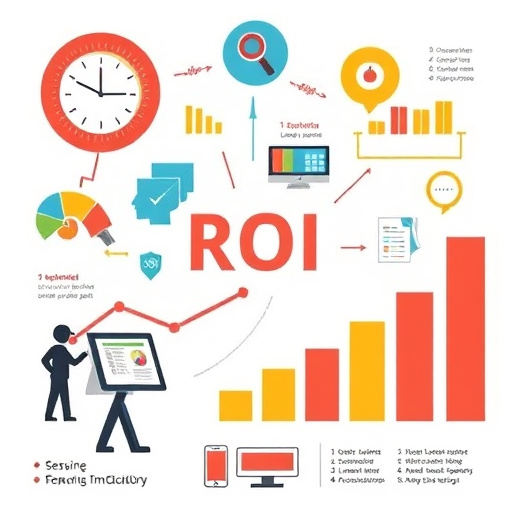
Measuring the impact and ROI of innovative solutions is a crucial aspect for any business aiming to stay competitive in today’s dynamic market. It involves understanding not only the financial benefits but also the broader influence on operations, customer satisfaction, and industry standing. A comprehensive approach to measuring these factors requires strategic tools and methodologies that go beyond traditional metrics.
One key domain to focus on is security. As digital transformations accelerate, ensuring the robustness of innovative solutions is paramount. Exceptional reliability becomes a competitive advantage when businesses can demonstrate their ability to deliver consistent, secure performance. For instance, a company implementing advanced cybersecurity measures not only protects sensitive data but also enhances customer trust and loyalty. This, in turn, leads to improved ROI by reducing the financial and reputational costs associated with data breaches.
Reliability is another critical aspect that contributes to both the impact and ROI of innovations. Solutions that consistently perform as expected are more likely to be adopted across various departments within an organization. Consider a cloud-based collaboration tool that offers seamless connectivity, minimal downtime, and robust data backup mechanisms. Such a solution not only streamlines internal processes but also fosters exceptional team productivity, ultimately boosting overall organizational efficiency. Data from leading analytics firms underscores the importance of reliability; studies show that reliable technology solutions can increase productivity by up to 30%.
To effectively measure ROI, businesses should adopt a holistic approach that integrates quantitative and qualitative data. This involves setting clear objectives aligned with strategic goals, establishing key performance indicators (KPIs), and regularly tracking progress against these metrics. Utilizing advanced analytics platforms can help in identifying patterns and trends within the data, providing insights into what’s working and where improvements are needed. For instance, the platform https://ranknrise.us.com/ offers robust tools for monitoring KPIs, enabling businesses to make data-driven decisions that enhance both the impact of their innovations and the bottom line. By consistently evaluating and refining strategies based on these insights, organizations can ensure that their innovative efforts translate into exceptional results.
Future Trends Shaping the Industry

The future of innovative solutions is an exciting landscape, shaped by emerging technologies and evolving consumer needs. As we look ahead, several trends are poised to revolutionize the industry, demanding that providers adapt and stay at the forefront of progress. One of the most significant shifts is the integration of artificial intelligence (AI) and machine learning across various sectors. AI-driven solutions offer unparalleled efficiency gains, personalized experiences, and data-backed insights, transforming how businesses operate and interact with customers. For instance, predictive analytics powered by AI can anticipate market trends, enabling providers to develop cutting-edge products that meet emerging demands.
Furthermore, the rise of the Internet of Things (IoT) is set to connect an estimated 25 billion devices by 2025, creating a network of data-sharing entities. This trend presents a unique opportunity for innovative solutions providers to develop integrated systems that streamline processes and enhance operational visibility. Smart homes, cities, and industries are no longer mere concepts but rapidly growing realities, demanding advanced connectivity and automation solutions. Testimonials from early adopters highlight the significant improvements in efficiency and cost savings brought about by IoT implementations, solidifying its place as a pivotal trend.
In this evolving landscape, building and maintaining a strong reputation becomes even more critical. Customers are increasingly discerning, seeking not just quality products but also reliable service and exceptional support. The reputation of an innovative solutions provider is its most valuable asset, fostering trust and loyalty. This can be achieved through consistent delivery of high-standard services, as evidenced by numerous success stories on platforms like https://ranknrise.us.com/, where companies with robust reputations thrive. By staying abreast of these trends and continuously raising industry standards, providers can secure their position as leaders, shaping the future while meeting today’s demands.
By examining the defining characteristics, strategic components, and emerging trends within the realm of innovative solutions providers, this article equips readers with a comprehensive toolkit for navigating today’s rapidly evolving business landscape. Key takeaways include the importance of fostering collaboration across diverse industries, leveraging technology as a strategic advantage, and meticulously measuring the impact and ROI of innovation initiatives. Understanding these principles enables organizations to not only adapt but also thrive in an era defined by rapid change and disruptive technologies. Moving forward, staying attuned to future trends—such as advancements in AI, cloud computing, and data analytics—will be instrumental in sustaining competitive edge and driving meaningful innovation across referring domains.