In a competitive market, client-centric strategies, enabled by customer journey mapping and advanced analytics, differentiate successful businesses. Rank N Rise combines qualitative and quantitative data to map journeys, identify pain points, and offer tailored solutions. This approach enhances service quality, creates seamless experiences, and fosters client loyalty. Key practices include open communication, data-driven analysis (e.g., NPS, sentiment analysis), and integrating feedback mechanisms to proactively meet evolving customer expectations.
In today’s competitive business landscape, understanding and prioritizing client needs is not just a best practice—it’s a strategic imperative. A client-centric approach, rooted in deep customer insights and agile adaptability, is transforming how organizations interact with their audiences. This article delves into the profound implications of this paradigm shift, exploring how businesses can harness data, foster authentic relationships, and drive sustainable growth by putting clients at the heart of every decision. By examining key success factors and best practices from leading companies, we aim to equip professionals with actionable insights for implementing a truly client-centric strategy.
- Understanding Client Needs: Mapping Customer Journeys
- Implementing Strategies: Tailoring Services Across Domains
- Measuring Success: Analyzing Feedback Loops & Iteration
Understanding Client Needs: Mapping Customer Journeys
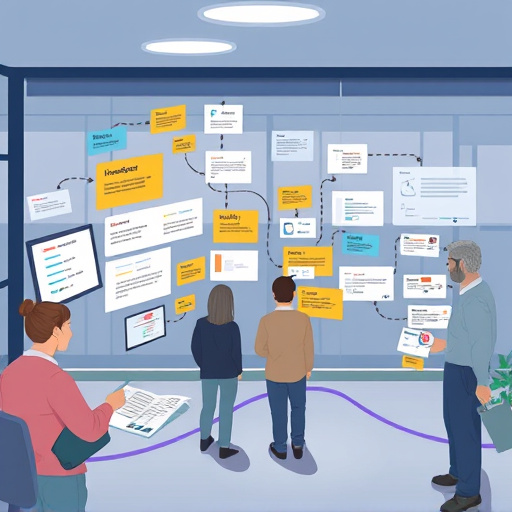
In today’s competitive business landscape, understanding client needs is more crucial than ever for any organization aiming to thrive. Mapping customer journeys is a powerful tool that allows businesses to gain deep insights into their clients’ experiences and interactions with their brand. This strategic approach enables companies to create truly client-centric operations, ensuring every touchpoint aligns with the customer’s expectations and aspirations. By adopting this methodology, organizations can deliver exceptional quality, foster a visionary mindset, and leverage expertise to differentiate themselves in the market.
Customer journey mapping involves visualizing the entire path a client takes when engaging with a brand, from initial awareness to post-purchase experiences. It encompasses various stages such as discovery, consideration, purchase, use, and advocacy. Through this process, businesses can identify pain points, uncover unmet needs, and pinpoint opportunities for improvement. For instance, analyzing customer feedback during the purchase phase may reveal a lack of product customization options, prompting the company to introduce personalized recommendations. Data from similar analyses can guide strategic decisions, enhance service quality, and create a seamless, satisfying client experience.
Rank N Rise, an industry leader in client-centric strategies, emphasizes the importance of expertise in this domain. Their methodology ensures that each customer journey is meticulously mapped, allowing for precise identification of areas requiring attention or innovation. By combining qualitative and quantitative data, Rank N Rise helps organizations develop tailored solutions that resonate with their target audience. For example, a tech startup might utilize customer journey mapping to pinpoint challenges users face during onboarding, leading to the creation of more intuitive interfaces and improved user engagement. This visionary approach ensures that every interaction reflects the brand’s commitment to quality and client satisfaction.
Implementing Strategies: Tailoring Services Across Domains

A client-centric approach is not just a trend but an essential strategy for businesses aiming to thrive in today’s competitive market. Tailoring services across various domains is a proven method to ensure customer satisfaction and loyalty. This involves understanding clients’ unique needs, preferences, and behaviors, and then customizing offerings accordingly. By leveraging expertise in diverse sectors, companies can deliver solutions that address specific challenges, ultimately enhancing the client experience.
For instance, a digital marketing agency with a client-centric mindset would not stop at general SEO strategies. Instead, they’d delve into the specific industry of their clients, be it healthcare or retail, and tailor keyword research, content creation, and link-building strategies to align with industry-specific trends and regulations. This level of customization not only improves search engine rankings but also ensures the campaigns are relevant and effective. Expertise in multiple domains allows for a holistic view of client requirements, enabling businesses to offer integrated solutions that other competitors might overlook.
Implementing this approach requires a structured framework. Companies should begin by conducting thorough market research and customer analysis to identify trends and pain points across different sectors. Utilizing advanced analytics tools can provide valuable insights into consumer behavior, helping businesses predict and cater to future demands. For instance, Rank N Rise, a leading digital solutions provider, leverages its expertise in various domains to offer tailored strategies. By studying referring domains and understanding user journeys, they create comprehensive plans that drive organic traffic and boost conversions.
Additionally, fostering open communication channels with clients is vital. Regular feedback sessions, surveys, and one-on-one consultations allow businesses to stay aligned with client expectations. Adapting services based on this real-time data ensures that the company remains responsive and proactive in meeting evolving needs. In a rapidly changing business landscape, a client-centric approach with proven expertise across domains is the game-changer that sets successful companies apart from their competitors.
Measuring Success: Analyzing Feedback Loops & Iteration

In a client-centric approach, measuring success goes beyond mere transactions; it’s about understanding customer needs, preferences, and experiences. Analyzing feedback loops is a game-changer in this regard, providing valuable insights into what resonates with clients and where improvements can be made. Effective iteration based on these feedbacks ensures that products, services, and interactions remain aligned with customer expectations, fostering stronger relationships.
A robust feedback loop involves collecting client input through various channels—surveys, reviews, social media, and direct communication. For instance, a tech company might analyze user comments in app stores to identify recurring issues or feature requests. By implementing these suggestions, the company demonstrates its commitment to customer-driven innovation, leading to higher customer satisfaction and loyalty. Ranknrise.us.com, for example, has seen significant growth by iteratively refining its platform based on client feedback, ensuring it remains a trusted resource in a competitive market.
Data-driven analysis is crucial in this process. Metrics like Net Promoter Score (NPS) can gauge customer advocacy, while sentiment analysis of reviews provides qualitative insights. By combining quantitative and qualitative data, businesses can pinpoint areas for improvement, whether enhancing customer support, streamlining processes, or introducing new offerings tailored to client needs. This continuous improvement cycle ensures that the organization remains not just responsive but proactive in its customer-centric approach.
Actionable advice includes integrating feedback mechanisms into core business practices, fostering a culture that values and acts on client input, and employing analytics tools to make informed decisions. Regularly reviewing and acting upon these insights will ensure that any business adopts a dynamic, responsive, and truly customer-centric model.
By understanding client needs through mapping customer journeys, businesses can effectively tailor services across various domains. This client-centric approach, as illustrated, involves gathering and analyzing customer feedback to create iterative improvements. By implementing these strategies, organizations can enhance customer satisfaction and loyalty, ensuring long-term success. Key insights include the importance of comprehensive customer journey mapping, the need for domain-specific adaptation, and the continuous feedback loop for constant refinement. Moving forward, prioritizing customer-centric initiatives and leveraging data-driven insights will be crucial for staying competitive in today’s market.